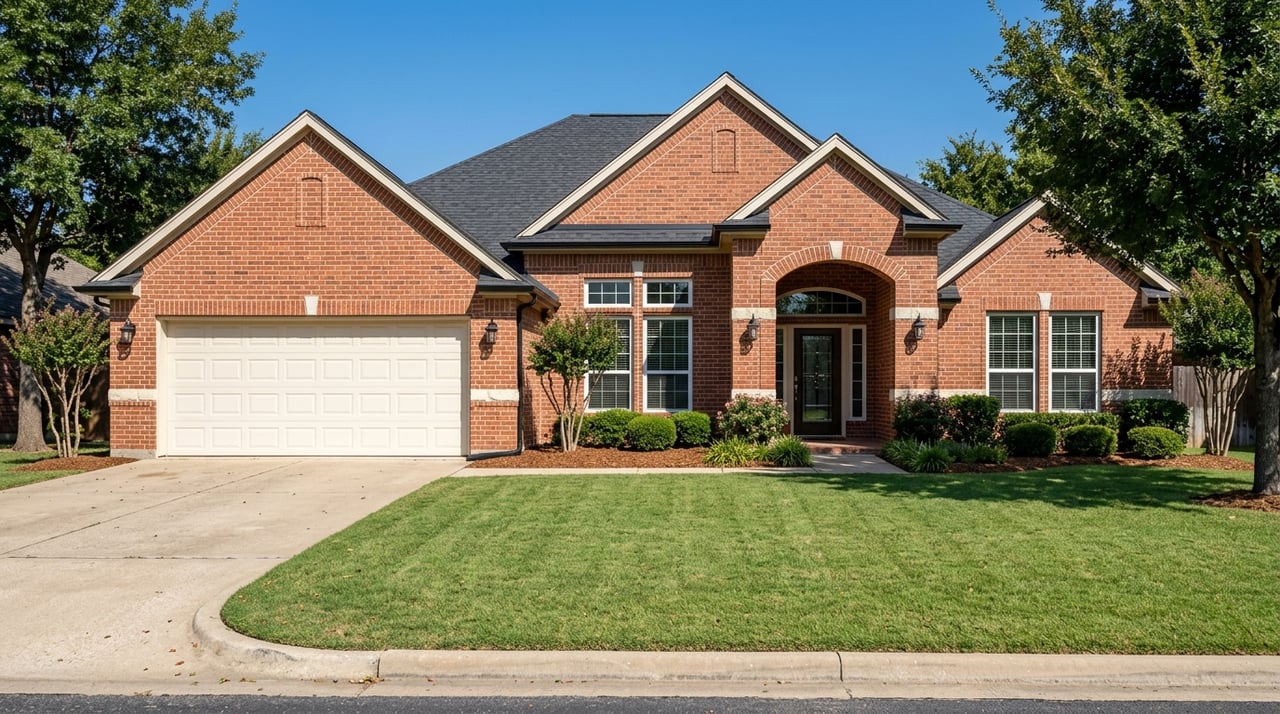
Is Parker TX Country Living the Right Fit for You?
May 28, 2026
May 28, 2026
Looking for a place where you can enjoy more breathing room without giving up the convenience of nearby shopping, jobs, and daily essentials? That balance can be hard to find in North Texas, especially if you want a quieter setting that still feels connected. In Parker, you can often find that middle ground, and this guide will show you what day-to-day life there really looks like. Let’s dive in.
Parker stands out because it offers a country atmosphere within Collin County while staying close to the broader Dallas-Plano-Irving area. The city has an estimated 6,462 residents spread across 8.52 square miles, which works out to about 641 people per square mile. That is a much lower density than nearby Plano, Allen, and Murphy.
That lower-density feel shapes daily life in a practical way. You may notice more open space, larger homesites, and a quieter pace than in a more typical suburban neighborhood. At the same time, Parker is still an established city with municipal services, local regulations, and access to nearby retail and employment centers.
Parker also has a very high owner-occupied housing rate at 98.9%, according to Census data. While every buyer’s goals are different, that statistic helps paint a picture of a city where long-term homeownership is a major part of the housing landscape.
One of Parker’s biggest draws is that it does not feel cut off from the rest of the Metroplex. The city itself describes Parker as a place with a country atmosphere and nearby city conveniences, including shopping and access to Plano and Allen area services. That mix is a big reason buyers keep Parker on their radar.
The average travel time to work for Parker residents age 16 and older is 27.1 minutes. That does not mean every commute will look the same, but it does support the idea that Parker can offer a slower pace without placing you far outside the region’s everyday job and activity centers.
If you work in or near Plano, that convenience becomes even more relevant. Plano remains a major employment hub, with large employers that include JPMorgan Chase, Toyota Motor North America, and Liberty Mutual Insurance Company. For many buyers, Parker offers a quieter home base with practical access to those nearby job centers.
If your wish list includes a larger lot, extra garage space, a workshop, a pool, or room for accessory buildings, Parker is worth a closer look. The city’s zoning structure supports an acreage-style residential setting more than many nearby suburbs do. In the single-family residential district, the minimum lot size is 2.0 acres net.
Parker also has a single-family transitional district that allows an average lot size of 1.5 acres net with a 1-acre minimum. In addition, the agricultural-open-space district is intended to preserve relatively undeveloped land and open-space uses. That district allows uses such as single-family residences, accessory buildings, farm and pasturage activities, and barns or stables.
For buyers, the practical takeaway is simple: Parker often offers the kind of setting where you may have room for more than just the house itself. You may be able to find properties with the space to accommodate outdoor living features, detached structures, or hobby space that can be harder to find in denser nearby cities.
It is important to keep expectations grounded in the city code. Parker defines accessory structures broadly, including barns, swimming pools, detached garages, bathhouses, greenhouses, toolsheds, and portable buildings over 120 square feet. That gives you a good sense of the types of features the city contemplates.
At the same time, these features are not automatic on every property. What is possible depends on the zoning district, lot size, setbacks, and permit requirements. For example, the city requires a building permit for pools and sets limits on accessory-building size and placement.
That distinction matters when you are comparing homes. A listing may offer a larger-lot feel, but the best way to evaluate future plans is to look closely at the property’s zoning and site details. In Parker, “country living” usually means more possibilities, not no rules.
Lifestyle is not only about lot size. It is also about how a place feels when you live there day after day. In Parker, the Preserve and Nature Trail is one of the city’s clearest quality-of-life features.
The city says the trail loops about 0.8 miles through the Preserve. Parker’s park information highlights open space, trails, historical areas, and public gardens, which reinforces the idea that the city values a more open and natural environment rather than a highly urban park system.
For you as a buyer, that can translate into a strong sense of place. Even if you are not looking for a major recreation complex, having meaningful open space nearby can add to the calm, country-leaning character that draws people to Parker in the first place.
Parker makes the most sense when you compare it with surrounding communities. Its population density is about 641.2 people per square mile. By comparison, Plano is about 3,982.5 per square mile, Allen is about 3,963.1, and Murphy is about 3,690.4.
That means Parker feels substantially less dense than many of the nearby suburban options buyers often consider at the same time. You are still in Collin County, but the physical experience of living there can be very different from living in a more compact subdivision setting.
Lucas is one nearby city that also leans toward larger lots and lower density, with about 487.9 people per square mile. Even so, Parker has its own identity as a city with established services, a preserve, and a country atmosphere that still connects easily to nearby urban conveniences.
For many buyers, school attendance is part of the home search process. Plano ISD says it serves residents in parts of Collin County and specifically lists Parker among the communities it serves. That can be part of Parker’s convenience story for buyers exploring the area.
Still, school assignment should always be confirmed for the exact property address. The district notes that attendance zones and campus assignments can vary, so it is best to treat school information as address-specific rather than assume the same assignment applies across the entire city.
That address-by-address approach is especially helpful when you are narrowing down homes. It gives you a clearer picture of what applies to a specific property instead of relying on a broad citywide assumption.
Parker tends to appeal to buyers who want a little more elbow room without moving too far from major conveniences. You may be drawn to it if you want a home that feels more private, a property with space for outdoor features, or a quieter setting that still keeps you connected to Plano, Allen, and the broader North Texas job market.
It can also be a strong fit if you want a city setting that feels more spacious than a typical suburban neighborhood. Parker is not remote rural land, and it is not a dense master-planned suburb either. It sits in a middle ground that many buyers find hard to replicate nearby.
If that balance sounds like what you have been searching for, Parker deserves a close look. For practical guidance on homes, lot considerations, and what may be possible on a specific property, connect with Linda Baker to request a showing or consultation.
Stay up to date on the latest real estate trends.
Get assistance in determining current property value, crafting a competitive offer, writing and negotiating a contract, and much more. Contact me today.
Linda Baker | Global Real Estate Advisor
7301 Lone Star Dr A115
Plano, TX 75024
